
Shaker vs Handleless Kitchens: Which Is Right for You?
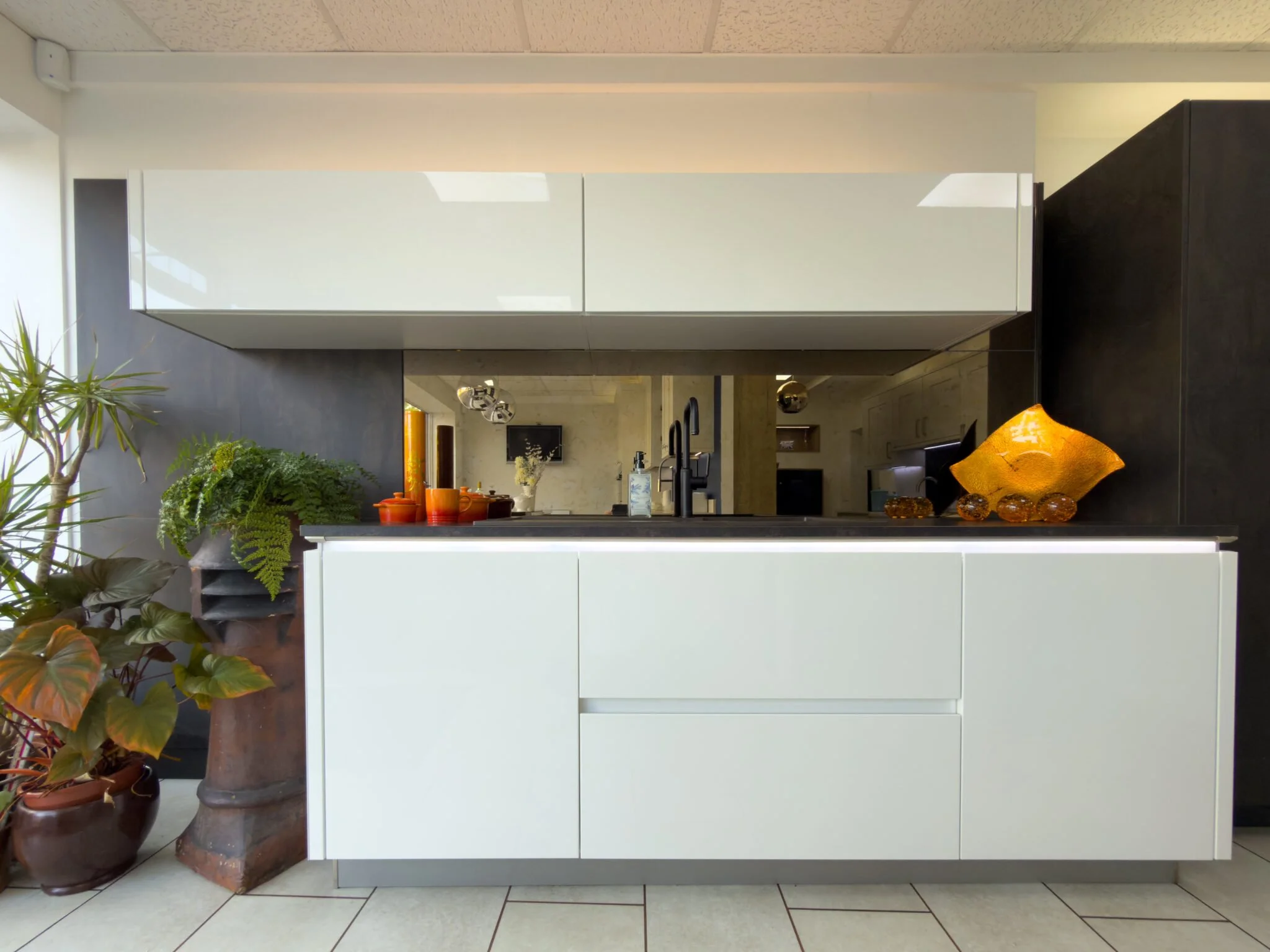
Two of the most popular kitchen styles in the UK
When homeowners start exploring kitchen styles, two options come up again and again: Shaker and handleless. Both are enduringly popular across Warwickshire and the wider UK, and both can produce stunning results. But they are very different in character, and the right choice depends on your home, your lifestyle and your personal taste.
This guide runs through the key differences between the two, the practical considerations to keep in mind, and how to decide which is the better fit for your project.
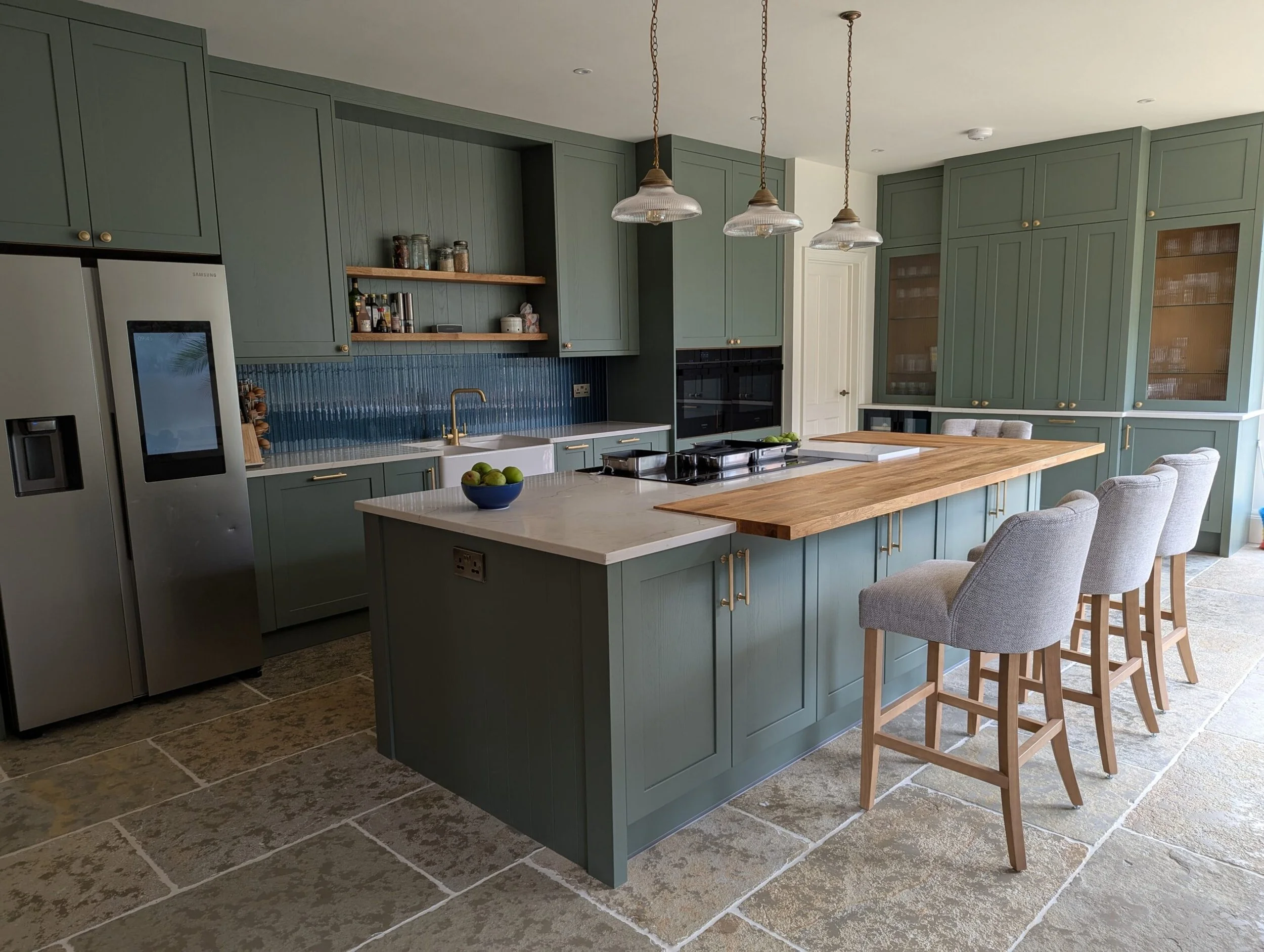
What is a Shaker kitchen?
Shaker is one of the oldest and most enduring cabinet styles in British kitchen design. It takes its name from the Shaker movement, known for its commitment to simplicity, quality and practicality.
A Shaker door is defined by its framed, recessed panel construction. It has a clean, structured look that works across a wide range of settings, from traditional farmhouse kitchens to more contemporary painted designs. The style is versatile precisely because it avoids extremes.
At Alex Lee Kitchens, we offer Shaker cabinetry in both painted and lacquered finishes through our classic and timeless kitchen range, with a wide choice of colours and hardware to suit different tastes.
What is a handleless kitchen?
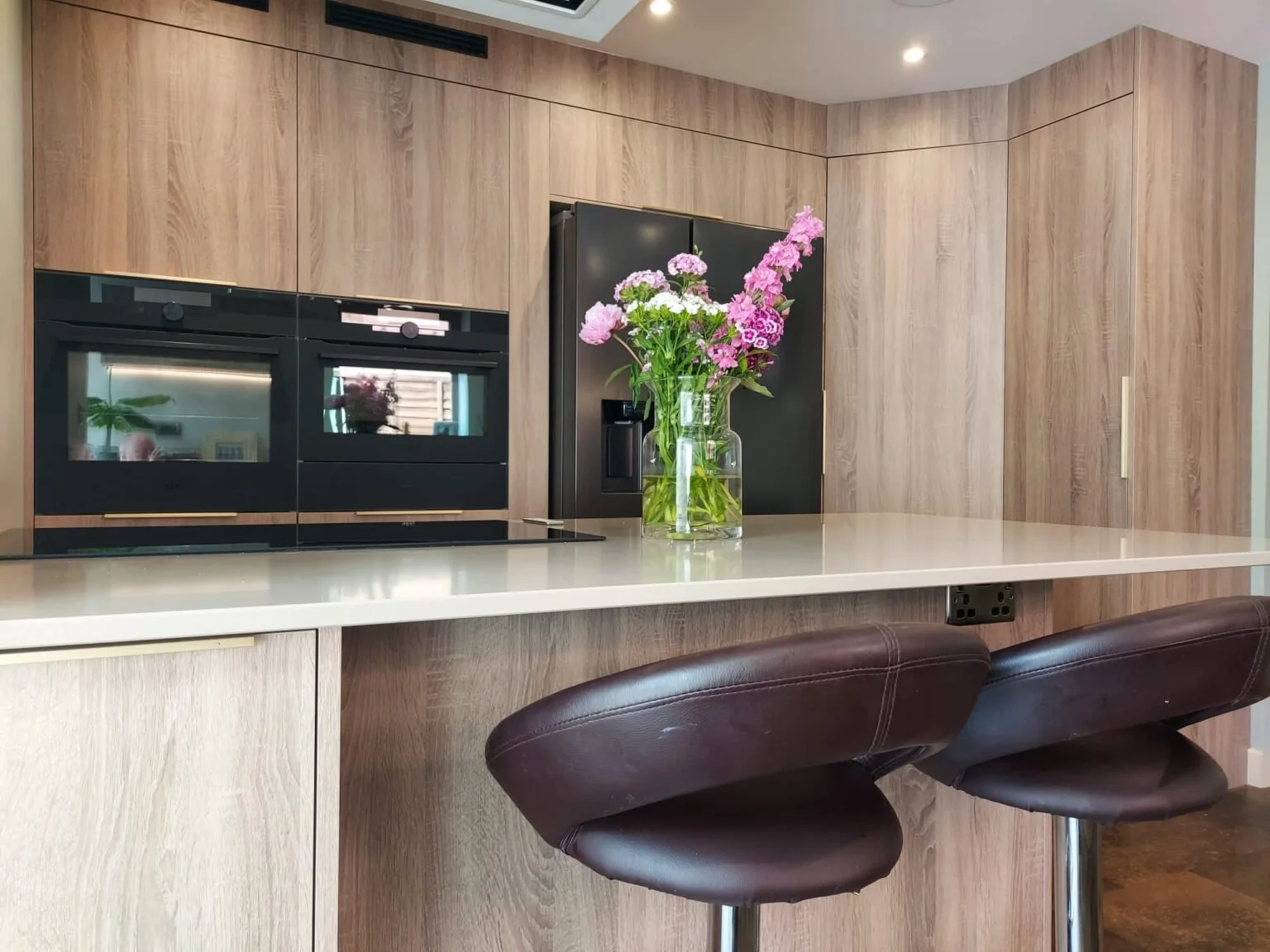
A handleless kitchen takes its aesthetic from contemporary design. Doors are opened using either a J-pull profile built into the top or bottom of the door, or a true handleless system where a recessed channel runs along the full length of the unit.
The result is a completely uninterrupted run of cabinetry, with no visible hardware. It creates a clean, streamlined look that suits open-plan spaces and modern interiors particularly well.
Our modern and contemporary kitchen range includes both J-pull and true handleless options, available in a range of finishes from matt lacquer to textured woodgrain.
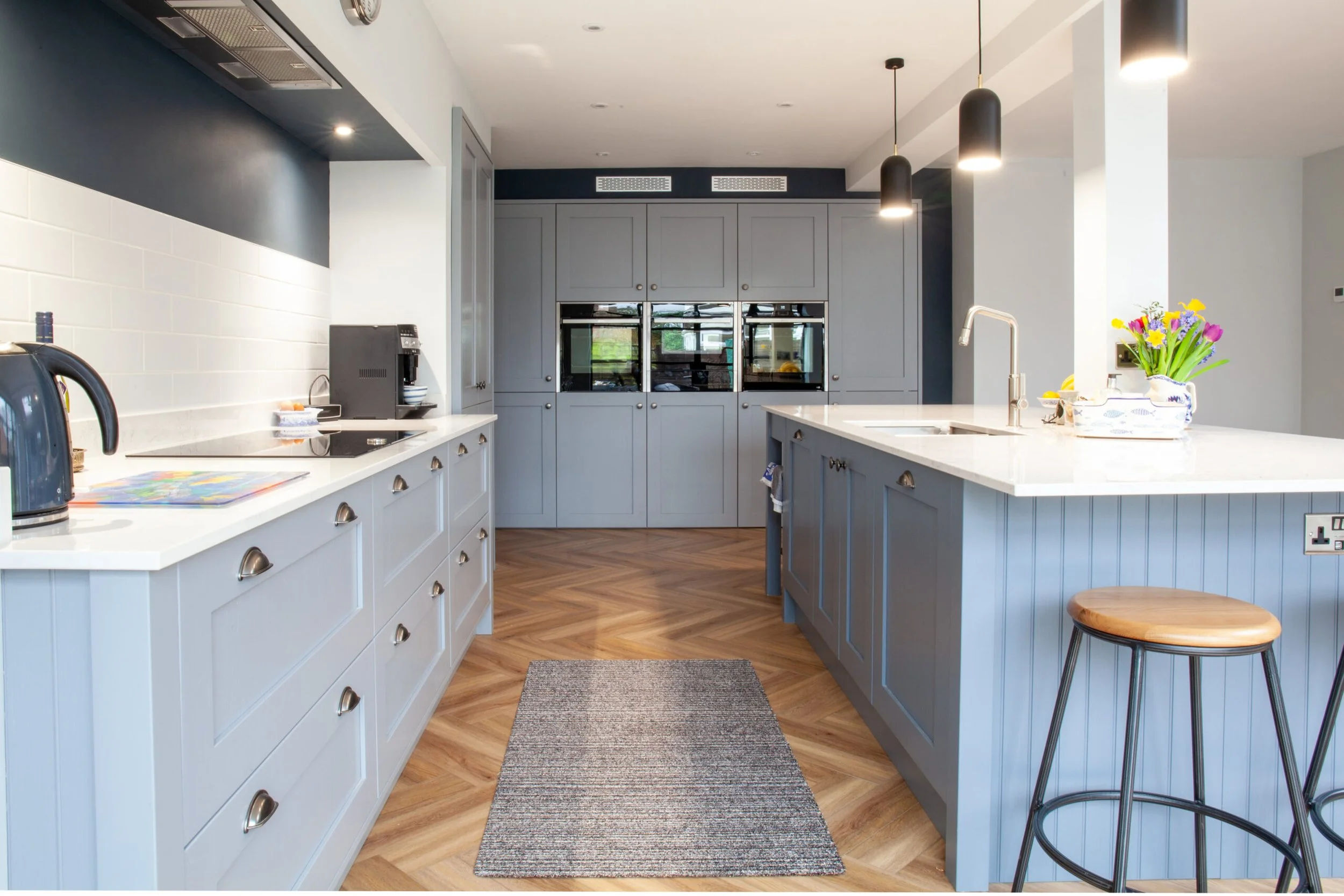
The practical differences
Beyond the visual difference, there are some practical considerations worth thinking through before making your choice.
Cleaning: Handleless kitchens can be easier to wipe down because there are no hardware crevices to clean around. However, the grip channels of a J-pull system can accumulate grease over time if not maintained regularly. Shaker doors with traditional bar handles are generally straightforward to keep clean.
Durability: Both styles are highly durable when made from quality materials. At Alex Lee Kitchens, all cabinetry is built using rigid 18mm carcasses with reliable hardware from Blum and Hettich, regardless of door style.
Usability: Some people find handleless kitchens slightly less intuitive to use at first, particularly for children or older users. Traditional handles give a clear, tactile grip and can make opening drawers and cupboards easier in everyday use.
Longevity of style: Shaker has been popular for over a century and shows no sign of fading. Handleless kitchens are very much a contemporary preference, but well-executed examples using quality materials have stood the test of time in recent decades.
Which style suits different types of home?
The character of your home often gives a strong steer.
A period property, a farmhouse or a home with traditional architectural details will usually respond better to a Shaker or painted framed style. The proportions feel right, and the kitchen reads as belonging to the house rather than sitting at odds with it.
A newer build, a barn conversion or a home with an open-plan extension often suits a handleless or contemporary design. The clean lines complement the architecture and the absence of hardware helps the kitchen feel like part of a larger, cohesive space.
That said, rules are there to be questioned. A well-executed handleless kitchen in a Victorian terrace can look extraordinary, and a beautifully finished Shaker kitchen in a new build can bring warmth to an otherwise plain space. The key is always the quality of the design and the specification of materials.
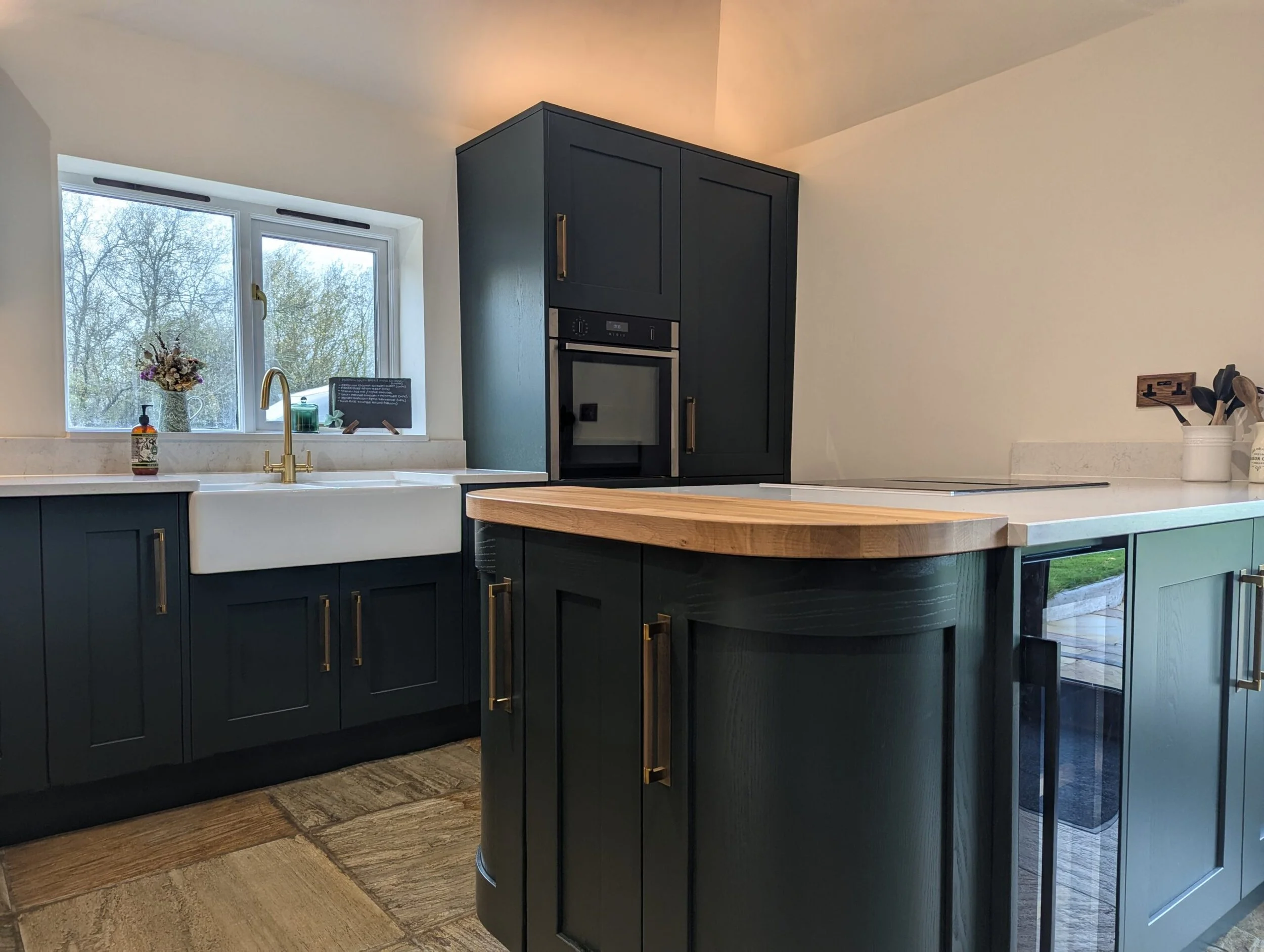
Seeing both styles in person
It is genuinely difficult to make this decision from a screen. Materials look different in real light, and the proportions of a door can only be properly appreciated when you are standing in front of it.
Our Rugby showroom has displays of both Shaker and handleless kitchens, along with a range of worktop and finish samples. You are welcome to drop in during opening hours, though we recommend booking an appointment if you would like dedicated time with Alex or Angela.
Call us on 01788 571 353 or email info@alexleekitchens.co.uk to arrange a visit or ask any questions.
FAQ’s
Is a Shaker kitchen more expensive than a handleless kitchen?
Not necessarily. The cost of a kitchen is shaped more by the quality of the materials, the size of the project and the specification of appliances than by the door style itself. Both Shaker and handleless kitchens are available across a range of price points.
Will a handleless kitchen date quickly?
A well-designed handleless kitchen using quality materials has proven its longevity over recent decades. Like any design choice, the key is avoiding overly trend-led finishes and focusing on proportions, materials and craftsmanship that stand the test of time.
Can I mix Shaker and handleless elements in the same kitchen?
Yes, and it can work very well. A common approach is to use handleless wall units for a clean upper section while introducing a framed or Shaker style on the base units or island. The key is ensuring the two styles are balanced and feel intentional rather than inconsistent.
What is the difference between J-pull and true handleless?
A J-pull door has a built-in profile along the top or bottom edge that you use to pull the door open. A true handleless system uses a recessed channel running along the full length of the door or unit, giving a completely flush, uninterrupted appearance.
Which kitchen style is easier to keep clean?
Both can be kept clean easily with regular maintenance. Handleless kitchens have no hardware crevices, which some people find easier. Shaker kitchens with traditional bar handles are also straightforward to maintain. The most important factor is the quality of the paint or lacquer finish used on the doors.