
How to Choose Kitchen Worktops: A Practical Guide
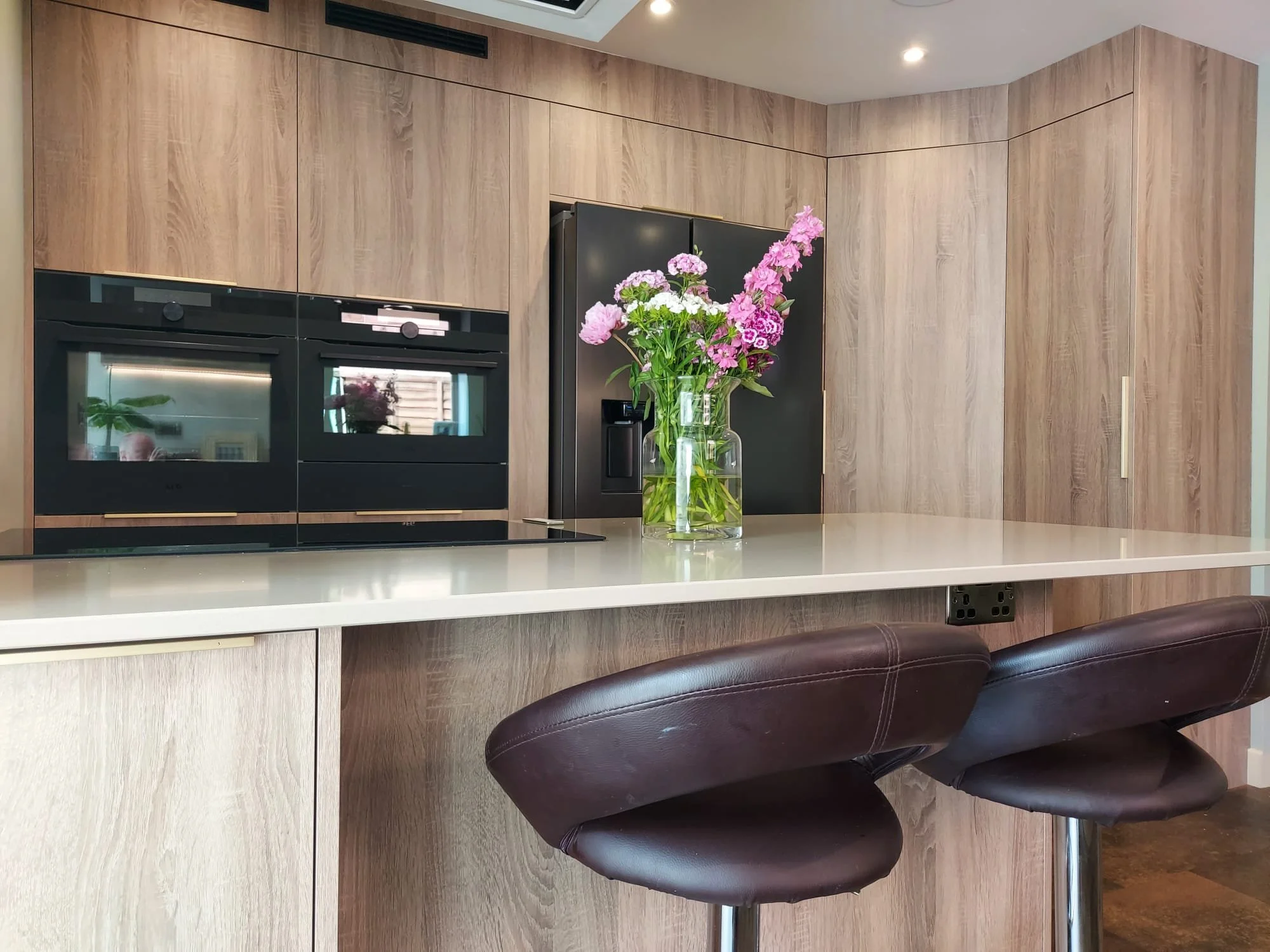
Why worktop choice matters as much as cabinetry
The worktop is one of the hardest-working surfaces in the home. It has to look beautiful, withstand daily use, resist heat and moisture, and remain practical for the way you cook and live. Yet it is often one of the last decisions made in a kitchen project, when it deserves to be considered much earlier.
At Alex Lee Kitchens, worktop selection is always discussed as part of the design process, not as an afterthought. The right worktop can elevate a kitchen significantly. The wrong one can undermine even the most carefully chosen cabinetry.
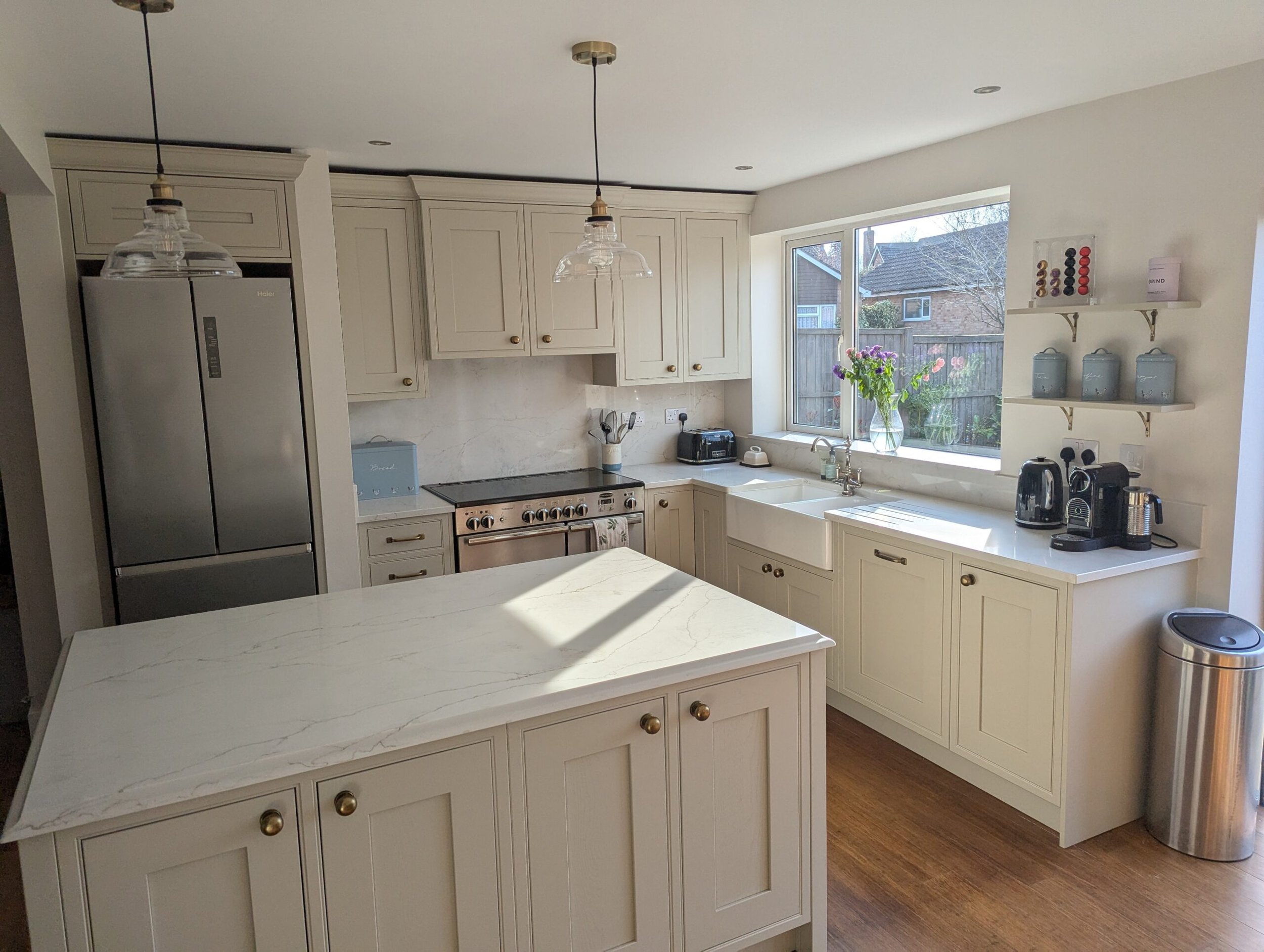
The main worktop materials explained
There are several worktop materials available to homeowners today. Each has genuine advantages and some trade-offs worth knowing about.
Quartz
Quartz is one of the most popular choices for fitted kitchens across Warwickshire and the UK. It is an engineered stone, combining natural quartz crystals with resin to create a highly durable, non-porous surface.
It does not require sealing, resists staining well, and is available in a very wide range of colours and finishes. Brands such as Silestone and Caesarstone, both of which we work with at Alex Lee Kitchens, offer consistent quality and a long manufacturer guarantee.
One consideration: quartz can be vulnerable to prolonged direct heat, so trivets or pan stands are recommended. It is also susceptible to discolouration from UV exposure in very sunny kitchens over time, depending on the specific product.
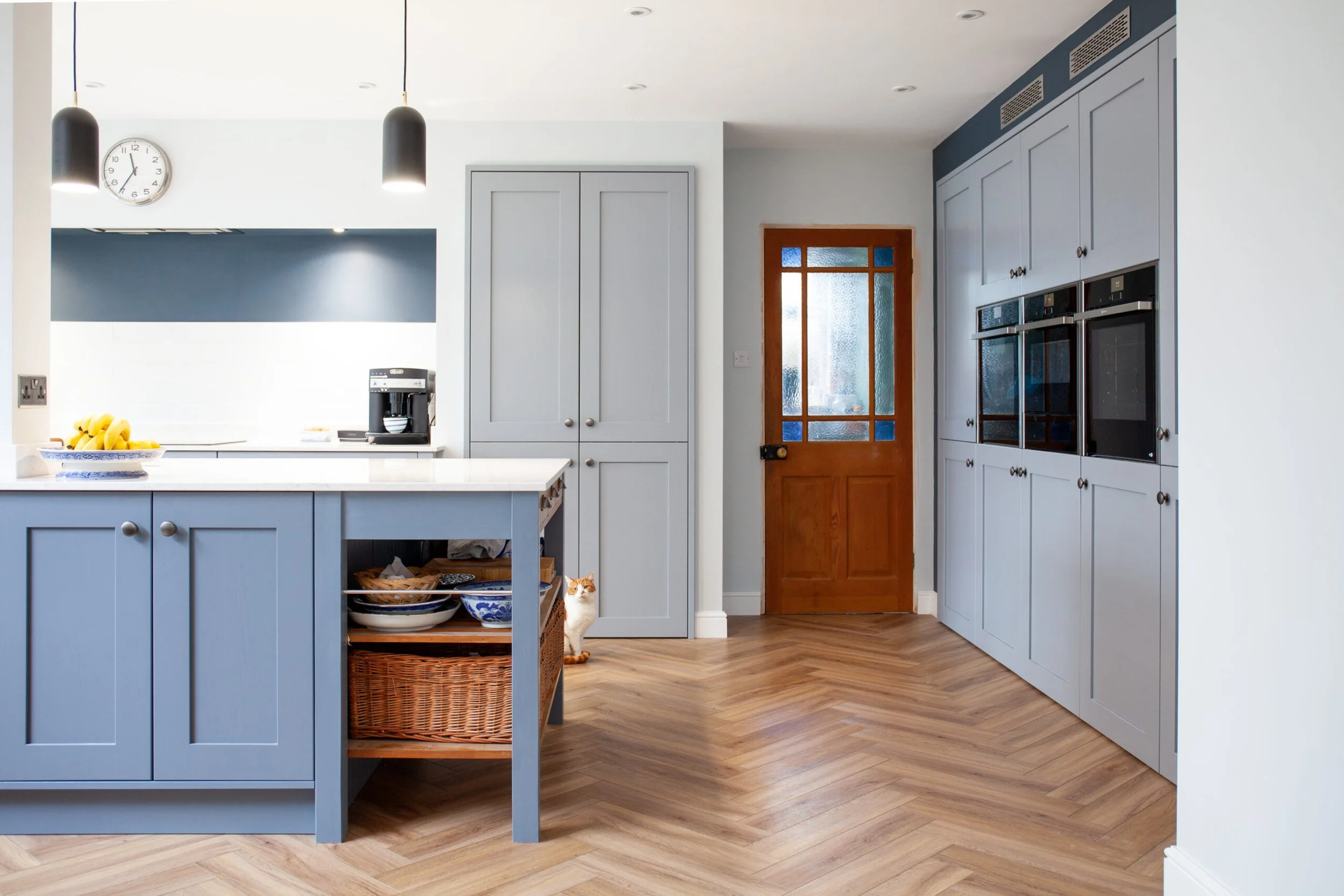
Granite
Granite is a natural stone with unique veining and patterning that cannot be replicated. Every slab is different, which gives it a distinctive character. It is extremely hard-wearing and heat resistant, making it practical for busy cooking environments.
Granite does require periodic sealing to maintain its resistance to staining, and the weight means it needs proper structural support. It is available in a wide range of natural tones, from pale cream and grey to deep black and green.
Porcelain and sintered stone
Sintered surfaces such as NeoLith, which we supply at Alex Lee Kitchens, are gaining considerable popularity. They are fired at extremely high temperatures to create a surface that is almost impervious to scratches, heat, staining and UV light.
Large-format slabs can create a striking seamless look, and ultra-thin versions can be used for splashbacks, hob surrounds and even flooring in coordinating designs. They are one of the most technically advanced worktop options currently available.
Solid wood
Solid timber worktops add warmth and character that stone surfaces cannot match. Oak, walnut and iroko are popular choices, and all develop a patina over time that many homeowners find appealing.
Wood does require regular oiling and more careful maintenance than stone. It is susceptible to water damage around the sink if not properly looked after, and it can mark from heat if trivets are not used. Used in the right setting, however, it is hard to beat for warmth and texture.
Laminate
Modern laminate worktops are significantly more sophisticated than their predecessors. High-quality options can convincingly replicate stone, timber and concrete finishes at a lower price point, and they are easy to maintain and replace if damaged.
They are not as heat or scratch resistant as stone surfaces, but for kitchens where budget is a key consideration, premium laminate can still deliver an excellent result.
Matching worktops to kitchen style
The worktop needs to work with the cabinetry, not fight it. Some combinations are naturally harmonious; others require more careful consideration.
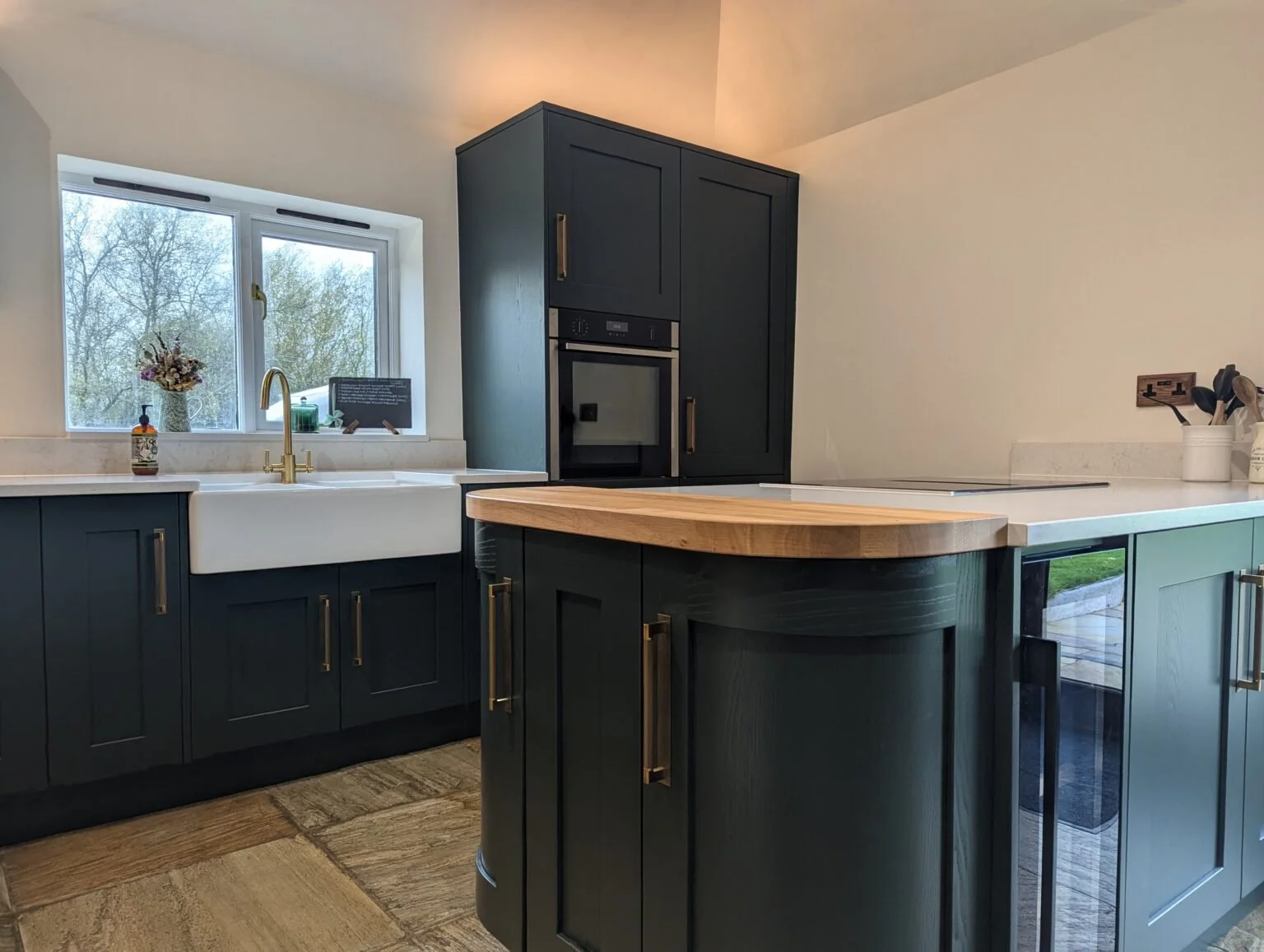
A classic or traditional kitchen often suits a natural stone, timber or honed finish. Polished white quartz on a heritage green Shaker kitchen, for example, can feel too contrasting. A warmer tone or a honed grey would sit more naturally.
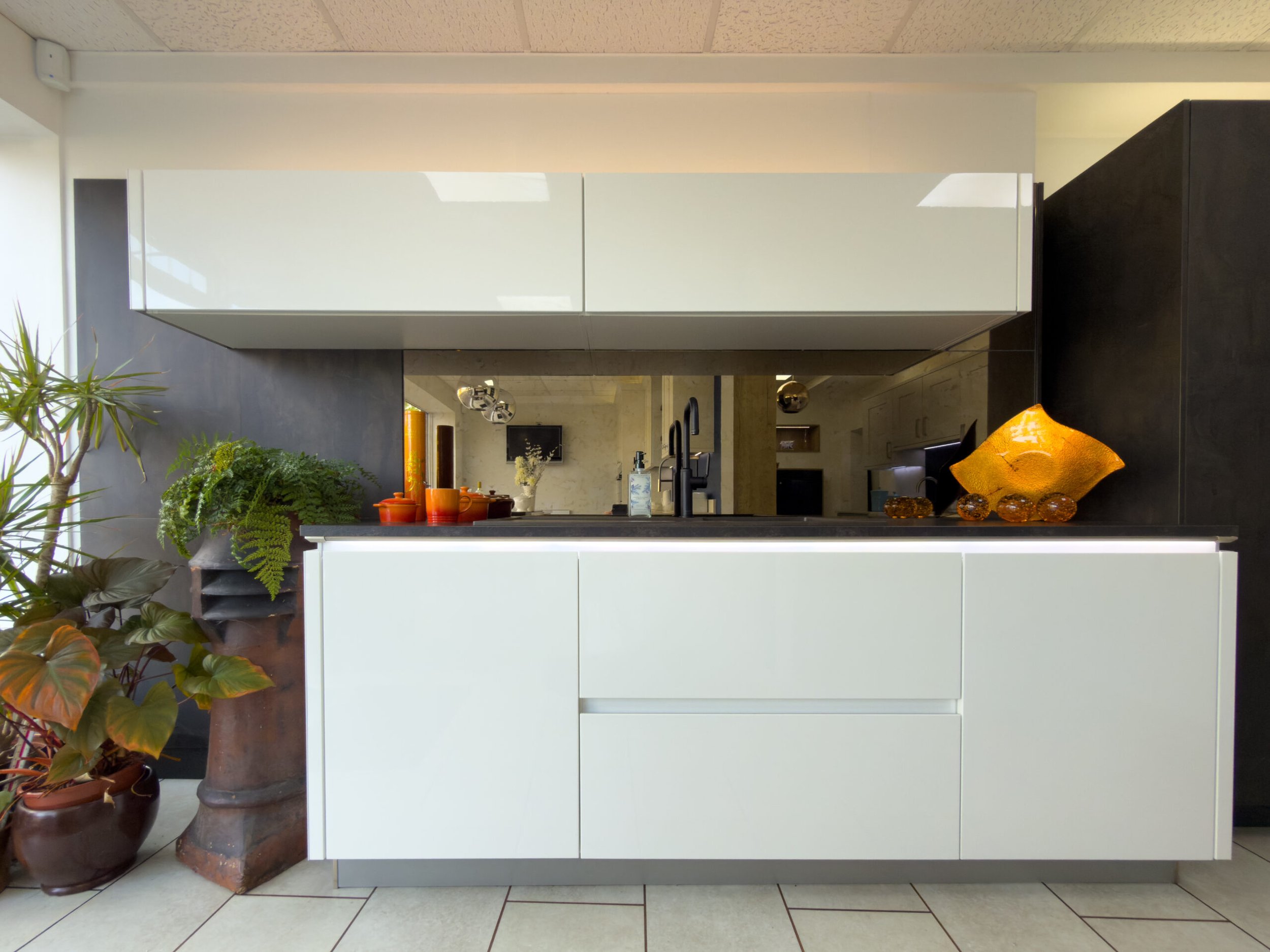
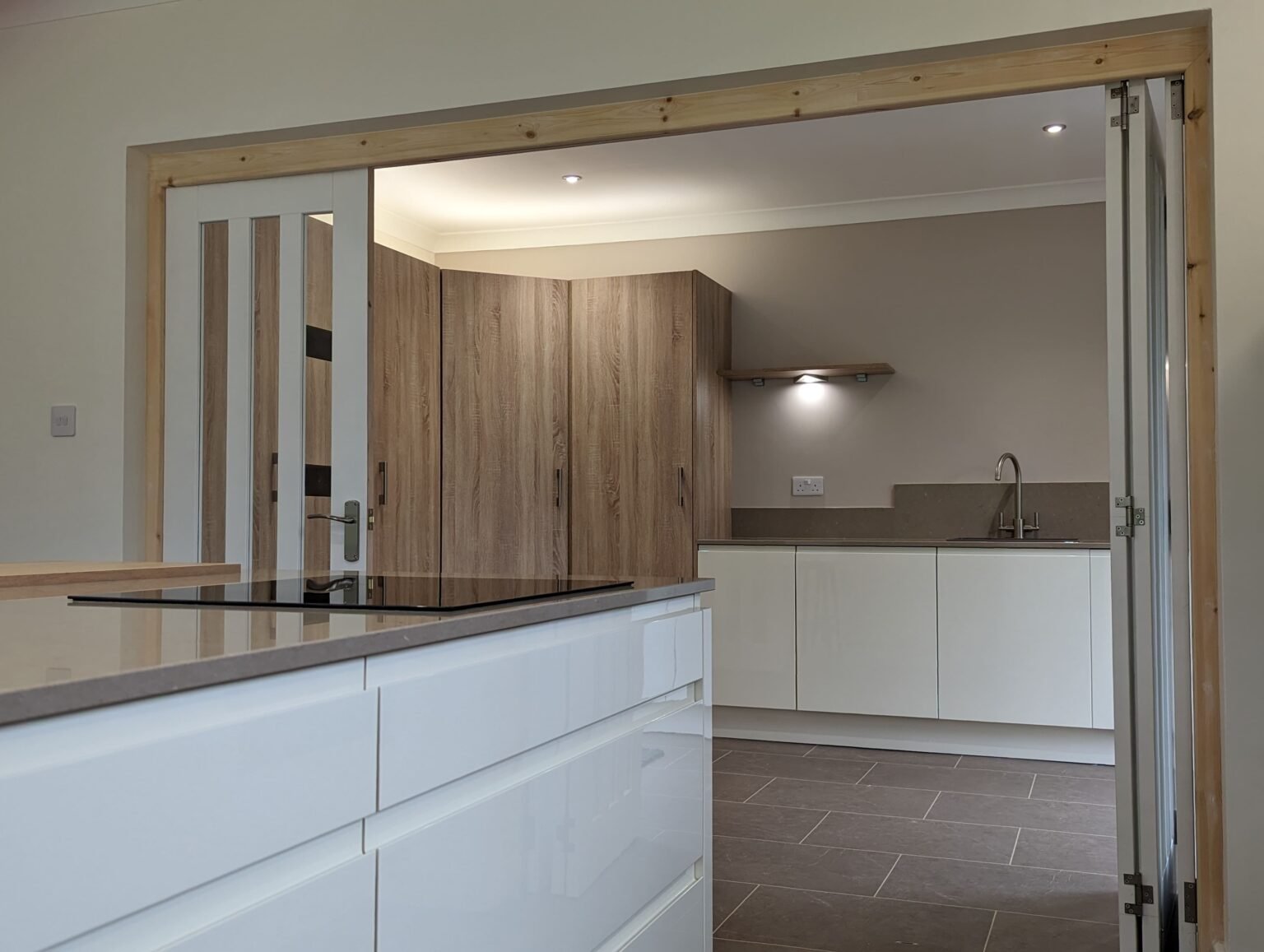
A contemporary or handleless kitchen tends to work well with large-format sintered stone or polished quartz. The clean surfaces complement each other, and the minimal jointing of a large slab reinforces the uncluttered aesthetic.
Practical questions to ask before choosing
Before settling on a material, it is worth asking yourself a few honest questions about how your kitchen is actually used.
Do you cook frequently and intensively? Are there young children in the house? Is the kitchen also used as a homework space or general household desk? Do you value low maintenance above all else, or are you willing to invest a little more time in upkeep in return for a particular aesthetic?
These are the kinds of conversations we have with every client during the design process. The goal is always to recommend a worktop that will genuinely serve the household well over the long term, not simply one that looks impressive in a photograph.
See worktop samples in our Rugby showroom
Worktop materials look very different on a screen compared to in person. The depth of a natural stone, the texture of a honed surface and the warmth of a timber edge can only really be understood when you are standing next to them.
Our Rugby showroom carries a selection of worktop samples alongside our display kitchens, allowing you to see how different materials work with different cabinetry styles. Book a showroom appointment to speak with Alex or Angela directly about your project.
You can also call us on 01788 571 353 or email info@alexleekitchens.co.uk at any time.
FAQ’s
What is the most durable kitchen worktop material?
Sintered stone surfaces such as NeoLith are among the most durable options currently available, offering excellent resistance to heat, scratches, staining and UV light. Granite and quartz are also highly durable choices for everyday kitchen use.
Is quartz or granite better for a kitchen worktop?
Both are excellent choices. Quartz is non-porous and requires no sealing, making it slightly easier to maintain. Granite is a natural stone with unique patterning and is highly heat resistant. The right choice depends on your lifestyle, the look you want and your maintenance preferences.
Can I put hot pans directly on a quartz worktop?
It is not recommended. Quartz can be damaged by prolonged direct heat, so trivets or pan stands should always be used. Granite and sintered stone surfaces are generally more heat resistant, but using protection is good practice regardless of the material.
How do I maintain a solid wood kitchen worktop?
Solid wood worktops should be oiled regularly, typically every few months and more frequently around the sink area. Avoid leaving standing water on the surface for prolonged periods and always use a chopping board. With proper care, a timber worktop will develop a beautiful character over time.
Which worktop brands does Alex Lee Kitchens supply?
We supply worktops from Silestone, Caesarstone and NeoLith, among other premium manufacturers. These brands are chosen for their consistent quality, durability and the range of finishes they offer. We also supply solid timber and laminate options depending on the project requirements.